
Propuesta de plan de manejo ambiental para el centro de transformación de limón comunidad Rancho Pampa, municipio de Torotoro del departamento de Potosí
DOI:
https://doi.org/10.56469/risa.v1i2.1976Palabras clave:
Área Protegida, Impacto Ambiental, Monitoreo Acústico, Viabilidad EconómicaResumen
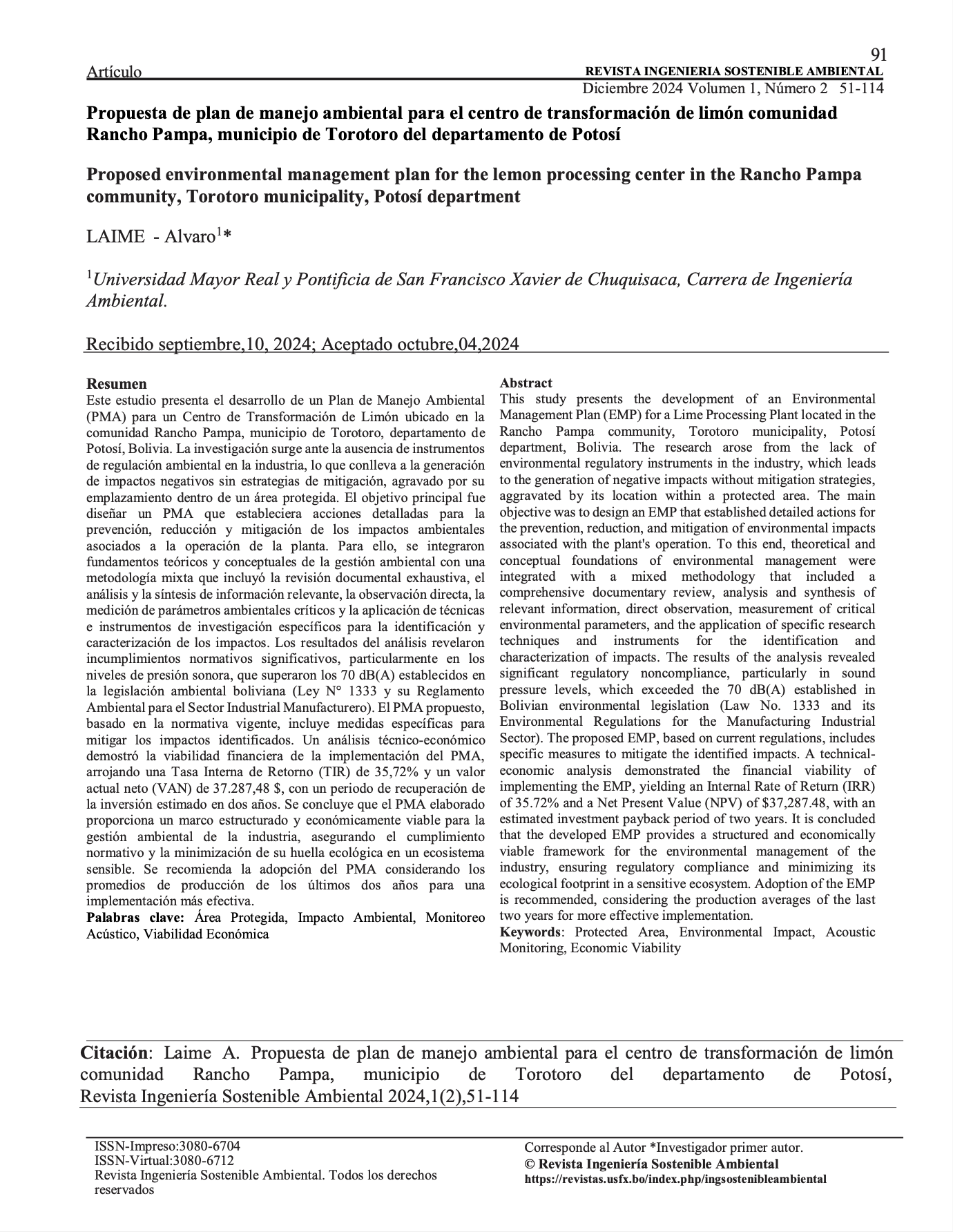
Este estudio presenta el desarrollo de un Plan de Manejo Ambiental (PMA) para un Centro de Transformación de Limón ubicado en la comunidad Rancho Pampa, municipio de Torotoro, departamento de Potosí, Bolivia. La investigación surge ante la ausencia de instrumentos de regulación ambiental en la industria, lo que conlleva a la generación de impactos negativos sin estrategias de mitigación, agravado por su emplazamiento dentro de un área protegida. El objetivo principal fue diseñar un PMA que estableciera acciones detalladas para la prevención, reducción y mitigación de los impactos ambientales asociados a la operación de la planta. Para ello, se integraron fundamentos teóricos y conceptuales de la gestión ambiental con una metodología mixta que incluyó la revisión documental exhaustiva, el análisis y la síntesis de información relevante, la observación directa, la medición de parámetros ambientales críticos y la aplicación de técnicas e instrumentos de investigación específicos para la identificación y caracterización de los impactos. Los resultados del análisis revelaron incumplimientos normativos significativos, particularmente en los niveles de presión sonora, que superaron los 70 dB(A) establecidos en la legislación ambiental boliviana (Ley N° 1333 y su Reglamento Ambiental para el Sector Industrial Manufacturero). El PMA propuesto, basado en la normativa vigente, incluye medidas específicas para mitigar los impactos identificados. Un análisis técnico-económico demostró la viabilidad financiera de la implementación del PMA, arrojando una Tasa Interna de Retorno (TIR) de 35,72% y un valor actual neto (VAN) de 37.287,48 $, con un periodo de recuperación de la inversión estimado en dos años. Se concluye que el PMA elaborado proporciona un marco estructurado y económicamente viable para la gestión ambiental de la industria, asegurando el cumplimiento normativo y la minimización de su huella ecológica en un ecosistema sensible. Se recomienda la adopción del PMA considerando los promedios de producción de los últimos dos años para una implementación más efectiva.
Descargas
Publicado
Versiones
- 2025-09-08 (2)
- 2025-08-02 (1)