
Vol. 1 No. 1 (2026): Revista Científica INGENIATEC
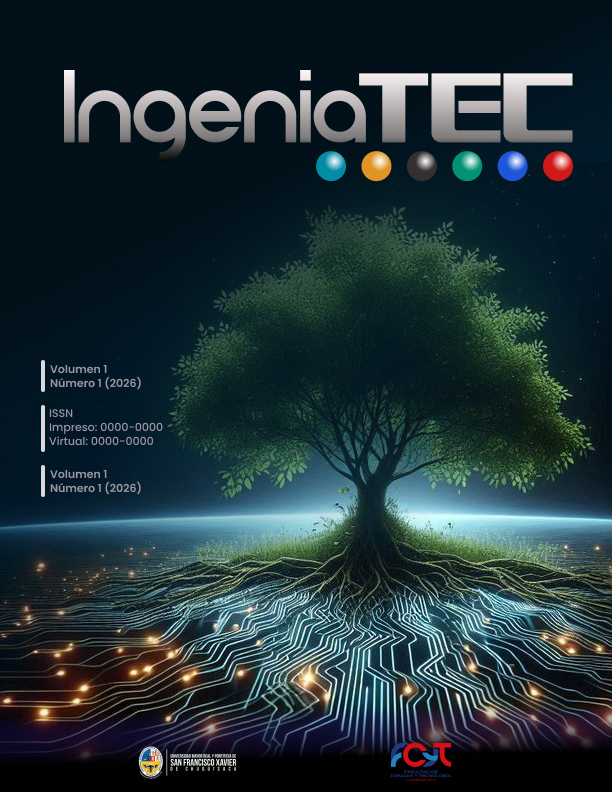
The Faculty of Sciences and Technology proudly presents the inaugural volume of INGENIATEC, a scientific journal conceived as a pluralistic space of rigorous methodology dedicated to the dissemination of knowledge, applied research, and technological development. In an era defined by accelerated global transformations, academia assumes the categorical imperative to address contemporary societal and industrial challenges through solutions grounded in science and engineering. This first issue reflects the unwavering commitment of our academic institution, the Universidad Mayor, Real y Pontificia de San Francisco Xavier de Chuquisaca, to research excellence and innovation.
The articles comprising this inaugural edition span a multidisciplinary spectrum, demonstrating the analytical versatility of our researchers. Within the fields of biotechnology, chemistry, and the revalorization of natural resources, high-impact studies oriented toward the circular economy and pharmacognosy are presented. Notable research includes the experimental extraction of hydrolyzed collagen from fish scales and the formulation of hydrating cosmetics from Aloe vera waste. Furthermore, rigorous analytical studies are showcased, such as the chromatographic validation for quantifying resveratrol in regional red wines, and process optimization for the extraction of D-pinitol from carob pods as a potential therapeutic insulin compound. Additionally, computational modeling in agribusiness is highlighted through the simulation of royal quinoa saponin removal in spouted fluidized beds.
At the frontier of computer science and telecommunications, INGENIATEC explores the vanguard of artificial intelligence with the development of sophisticated visual and volumetric recognition software. Utilizing neural networks and natural language processing, this system enables the automated generation of nutritional recipes. Concurrently, an infrastructure analysis regarding the current state of Hybrid Fiber-Coaxial (HFC) cable television networks in Sucre is provided, offering a valuable diagnostic assessment of local telecommunications.
Finally, technological sustainability and industrial risk management are addressed through research of profound practical relevance. The performance of regenerating equipment is parametrically evaluated to extend the lifespan of alkaline batteries, representing a commendable effort to mitigate environmental liabilities. For its part, the petroleum engineering sector contributes a critical model simulating hydrocarbon well blowouts, establishing guidelines to optimize operational safety protocols.
The consolidation of this first issue has been made possible through the dedication of the authors, the meticulous scrutiny of the peer reviewers, and the technical diligence of the editorial board. INGENIATEC is born with the purpose of becoming an indispensable reference. We invite the scientific community, students, and the productive sector to delve into these pages, confident that the knowledge disclosed herein will serve as a catalyst for future technological synergies.
Published:
2026-10-07